Service 01 · Right-of-Way

Initial. Cycle. Restoration.

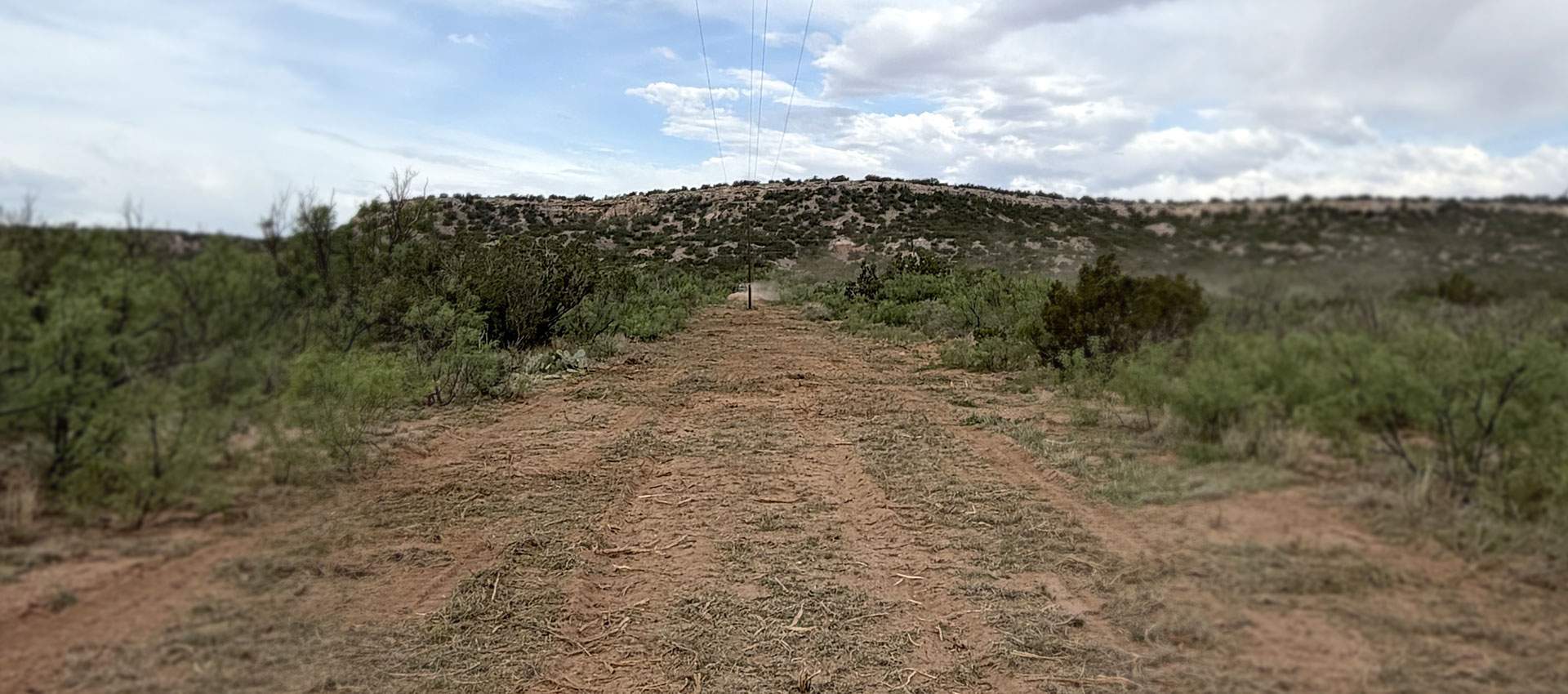
Right-of-way clearing is what we started doing in 2019 and what we still do more of than anything else. New-build corridors, cycle re-clear, hazard-tree programs, and emergency restoration — under transmission, pipeline, and rail standards.

Miles / Year500+
Active Corridors14 today
MethodsMech · Manual · Aerial
Capabilities / 01

Three ways
through the corridor.

Most jobs use a mix. Our pre-bid walk-down tells us where the mechanical line ends, where the manual climbers start, and where the helicopter saw earns its keep.

METHOD-01

Mechanical

Tracked mulchers, skid-steer carriers, drum chippers, and feller-bunchers. The production line for any corridor that can take a tracked machine.

METHOD-02

Manual

ISA-certified climbers with chainsaws for residential ROW, near-structure work, and wire-zone trim where mechanical can't reach.

METHOD-03

Aerial

FAA Part 133 helicopter-saw and lift-truck access for canyon, ridgeline, and water-crossing corridors. Outage windows shrink dramatically.

Methodology / 02

From scope
to restoration.

A five-phase delivery model audited and approved by major IOUs and pipeline operators. Every phase has an owner-facing deliverable.

01

Scope & Survey

GIS walk-down, species inventory, hazard-tree tagging, environmental constraint mapping.

Week 1
02

Permit & Mobilize

Permits, landowner notifications, traffic control plans, crew and equipment staging.

Weeks 2 — 3
03

Execute

Mechanical mulching, side-trim, manual cutting, or selective herbicide per IVM design.

Production
04

QC & Document

Owner-standard QC walk, photo evidence pack, structure-by-structure NERC FAC-003 documentation where applicable.

Daily
05

Restore & Close

Seed, lime, mat removal, landowner sign-off, and final close-out package to your land and integrity teams.

Final Week
Common questions / 03

What owners
ask first.

A short list of the questions we hear during the bid walk. None of these are surprises — but if your spec sheet has a wrinkle, we'd rather hear about it on the call than in the field.

Do you self-perform the work, or sub it?

Self-performed. The crew on your job is on ALCC's payroll, our safety record, and our certificate of insurance. We use specialty subs only for traffic control on isolated DOT jobs.

What's your typical mobilization time?

Under a standing MSA, 5 — 10 business days for production crews and 24 — 48 hours for storm response. For new clients, mobilization runs after prequalification close — usually two to four weeks total.

How do you handle landowner notifications?

To the owner's specific protocol. Some clients require door-hanger plus follow-up letter; others want a phone call from the right-of-way agent before the saw shows up. We follow your standard, not ours.

What about T&E species, wetlands, and cultural resources?

Constraints get flagged during the pre-mobilization walk and built into the daily work plan. We don't certify environmental compliance, but we coordinate with the environmental inspector on every job that has one.

Can you mobilize for emergency storm restoration?

Yes. We've held standing mutual-assistance MSAs with major IOUs since 2009. See our storm response page.

Need a corridor scoped? Send the alignment.